
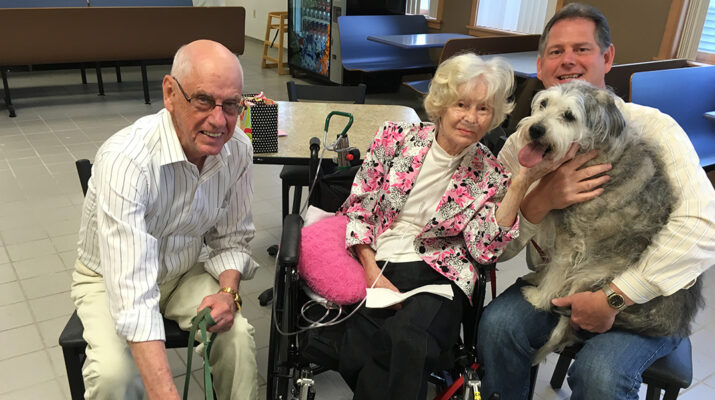
A son recounts his experience in taking care of his parents
By Deborah Jeanne Sergeant
For Phil Shippers taking care of his parents, Bob and Edna Shippers, was all about organization, delegation and planning.
Before his role at the Alzheimer’s Association Rochester Finger Lakes Chapter — where he serves as program director — Shippers found himself gaining firsthand knowledge of the disease’s effects by caring for his folks. Edna died eight years ago and Bob four years ago.
Phil Shippers watched after them for eight years.
Fortunately for Shippers, he has siblings living locally who were all willing to pitch in and help. While Shippers helped organize care, having siblings who could take over pieces of the effort made it much easier for him.
After Edna experienced a stroke, she went to live in a residential facility to provide the level of care she needed.
“I was always thinking about mom’s care,” Shippers said. “But someone was caring for all her activities of daily living. We could spend some happy time together.”
This allowed him to experience more of the mother-son relationship in Edna’s last years instead of primarily a caregiver-patient relationship.
Taking care of someone full-time can change the dynamic of the relationship as the caregiver will need to help the patient with personal hygiene, eating, dressing and other intensely personal tasks. Unless both are very comfortable with the arrangement, this can be tough.
Bob remained fairly independent for all his life. However, a few tweaks were necessary to assist him in staying safe, such as signing him up for Meals on Wheels to ensure he ate well and for another person to look in on him each day.
Automating grocery delivery can also help encourage eating right for people still capable of preparing food.
Changes in the loved one’s home can help as well.
“We had signs all over the house reminding him of things like ‘Do Not Drive,’” Shippers recalled.
He and his siblings parceled out various tasks to ensure they could meet Bob’s needs. For example, Shippers’ sister managed his medications.
“I feel good we could support dad in living independently,” Shippers said.
When people ask what they can do to help, Shippers said it’s important to take them up on the offer with a specific suggestion, such as taking dad for a haircut or going out to lunch with him every other Thursday.
“Because we were local, we didn’t have a lot of outside agencies come in, Shippers said.
He could better address his parents’ needs once he learned about why they exhibited some of their behaviors. For example, Shippers learned that it’s not wise to ask “Do you remember…” but instead to share one’s own memories.
“If they remember, that’s great,” he said. “If they don’t, it’s still a positive experience. We’re human. We don’t always do the right thing. We have to change our approach.”
Shippers also learned that giving a sampling of something previously enjoyed can comfort loved ones. Edna had always enjoyed hearing about Shippers’ family dogs. Towards the end of her life, he gave her a mechanical dog to keep with her, a happy reminder of a furry companion. He would even occasionally move the dog to a different part of the room in a lighthearted ruse about how lively the dog was.
Overall, getting enough help from his siblings and outside sources made caring for his parents a lot easier for Shippers.
“Be on the same page and support each other,” Shippers said. “Don’t make one person the bad guy. A shared approach is best. There’s no one way to do this. I encourage caregivers to look at what went right. Recognize those things when they happen.”