
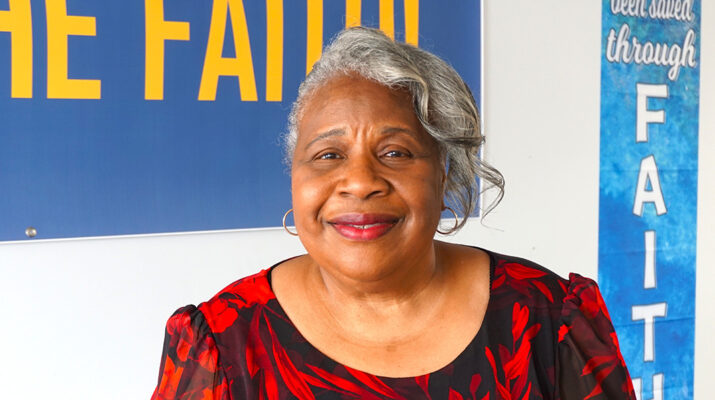
A local nurse from HCR Home Care is teaming up with religious leaders to bring health support directly to older African Americans in the community
By Mike Costanza
The death of a friend during the COVID-19 epidemic led Deanna Dudley to try to help local African Americans learn how to access health care.
“She went in with COVID symptoms and found she was not only diabetic, but had kidney failure and she had no idea,” Dudley said.
The friend died not from COVID but her other ailments.
The experience prompted Dudley, who is the compliance nurse for HCR Home Care, to develop the Diverse Care Project.
HCR, a Rochester-based home health care, started the project in order to help members of the local African American community who are 65 or older monitor their health and access the medical care they need. In order to accomplish those goals, it has reached out to that community through the pastors and churches that serve it.
“Even if somebody is not religious or spiritual or even goes to church regularly, everybody knows a pastor or a priest or a reverend somewhere,” Dudley said. “Why not get these faith leaders in our community to spearhead what we’re trying to talk about, which is getting access to health care.”
By doing so, she hopes to overcome the longstanding aversion that some African Americans have to accessing health care. That aversion might arise in part from the racial makeup of US physicians as a whole. According to a 2025 report by KFF, a leading national health policy organization, White people make up 58% of the U.S. population but represent 63% of its physicians. In contrast, African Americans make up 12% of the population, yet only 6% of U.S. physicians identify as African American.
“We understand that 9.9 times out of 10 when we go into a medical facility, the person taking care of us is not going to look like us,” said Dudley, who is African American. “I think we’ve come to accept that, but I think it’s also a driving factor as to why we don’t want to get assistance.”
Another recent KFF survey found that African American adults were more likely than Whites to state that a health care provider treated them unfairly or with a lack of respect due to their race or ethnicity. They were also more likely to report such negative experiences as having a request ignored or being denied pain medication that they thought they needed.
Some members of the local African American community say they have witnessed such treatment firsthand.
The Rev. Chassity Dennis, who spent 10 years working as a care manager for a local health care provider, believes that the local physicians she encountered treated White and African American patients differently when dispensing pain medications.
“It is an inherent bias that they believe that we can take more pain than other cultures,” she said.
She asserts that that view led physicians to tell some African American patients to take Tylenol for pain but prescribe more powerful medications for White patients who were in the same condition. If true, such experiences could lead members of that group to avoid seeking medical care.
“A lot of the reasons why people in the Black community don’t want to go to a hospital or doctor is because they are afraid that they’re going to be mistreated,” Dudley said.
Lack of knowledge can also leave patients reluctant to seek treatment. Pastor Sandra Felder of the Rhema Life Community Church, where the congregation’s average age is about 50, said the older members of her flock are sometimes unable to obtain the information they need from their physicians.
“They don’t understand what the doctor is saying to them and a lot of times the doctor doesn’t take the appropriate time with the African American people to express and explain to them what they need,” she said.
Cultural factors can also leave community members less willing to seek care.
“One thing that, in the Black community, that we are taught, is you don’t let outside people come in and take care of your family,” Dudley said. “We take care of our own, so it’s a feeling of shame and guilt when we cannot help our relatives and we have to go to outside help.”
Some members of that community might also lack health insurance or be unable to physically access medical care due to a lack of transportation.
As many as 40 local African American churches have become involved with the Diverse Care Project since it got off the ground. As part of a six-week Aging in Place workshop a mental health therapist spoke to members of Dennis’ Rochester church about end-of-life planning.
“It allowed people to be able to engage with that information in a way that they can ask questions, or they can have systematic ways of being able to address the issues,” Dennis said.
Felder’s flock has been able to attend three sessions of the Aging in Place workshop, including one on how to avoid falls.
“They gave good information on safety procedures, how to protect yourself from falling,” Felder said.
Those attending the workshops were also given a hot lunch and goody bags containing such items as no-slip socks.
HCR offers many types of services to homebound patients, including physical and occupational therapy, pain management and the services of social workers, dietitians and home health aides.
“We provide care that meets the culture,” Dudley said. “We don’t want anybody to feel that because the nurse coming to take care of you does not look like you, that you are not going to be treated with respect and get the quality care that you deserve.”
Dudley said that since the Diverse Care Project began more and more African Americans have begun using HCR’s services. As many as 200 additional patients signed up in the past year alone.
“The great part is that even caregivers, you know, younger people have called because grandparents are in the hospital,” she said. “They’ve been the ones that really have reached out the most to inquire about these services to help their elderly relatives.”
To learn more about the Diverse Care Project, visit: www.hcrhealth.com/diverse-care