
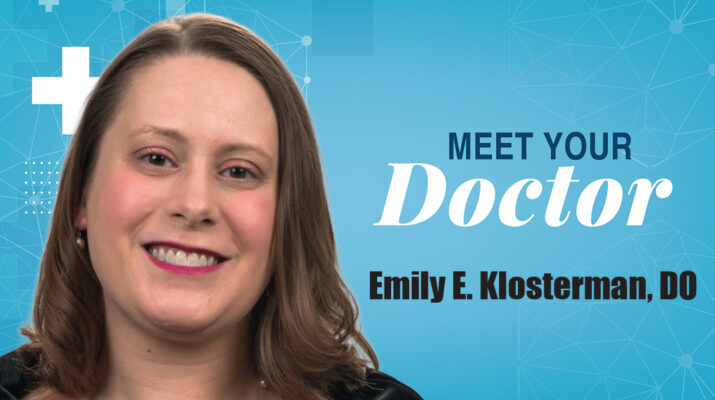
Rochester Regional Health physician reflects on her work as a breast surgical oncologist, saying her osteopathic training has shaped a patient-centered holistic approach to care
By Chris Motola
 Q: You are a breast surgical oncologist, correct?
A: Yes. The primary patients I work with are those with breast cancer. But I also treat patients with benign breast conditions, like everything from breast pain to breast cysts, patients who are also at high risk for breast cancer. I also do genetic counseling as well as survivorship. So, a little bit of everything in between.
Q: When is surgery the best option?
A: Yeah, so we definitely approach every patient independently and uniquely. So, each plan, whether it’s a breast cancer patient or a benign breast patient, I approach each one individually. For breast cancers, typically surgery is almost always part of the treatment algorithm. But for other parts of breast treatment and breast disease, surgery may not always be the first line. There are different things that we can do as breast surgeons that help with their symptoms and also with their treatment. So, treatments really do vary on a case-by-case basis with each patient.
Q: Are there new developments that help reduce healthy tissue damage from surgery?
A: So, in terms of breast cancer surgery, there have been a lot of new developments coming along the way. Since the 1990s, breast conservation has really been one of the paramount parts of practice and for treatment of breast cancer. And we’ve continued to move that way. So, for patients where we can, and where it’s appropriate as part of their treatment, we try to lean towards breast conserving surgery or lumpectomy for their cancer care. But depending on the patient, we still have to do some more extensive surgeries like a mastectomy or removal of the breast, but even for patients who do require a mastectomy, we do also look for patients who are candidates for skin-sparing mastectomy to try to spare some of the skin, a nipple-sparing mastectomy where we can potentially spare the nipple. There are some newer innovations where we’re looking at nerve-sparing mastectomies as well, as part of a nipple sparing mastectomy, where we can try to spare the sensation to the nipple as well. So, it really has come a long way. There are currently some centers looking at robotic mastectomies or endoscopic mastectomies as minimally invasive options. But we’re still waiting to see what the outcomes for those specific procedures are right now. Breast surgeons are being trained in smaller cohorts for those specific procedures. So, hopefully, in the future, we’ll be able to offer those to our patients.
Q: Are you involved on the diagnostic side?
A: In terms of where I come in from the diagnostic side, I’m able to perform certain types of biopsies, like punch biopsies and core needle biopsies. We also partner that with our clinical exam. But we also approach a lot of our diagnoses along with our radiology colleagues, who work in coordination with.
Q: How advanced are the cases you typically see?
A: Screening is becoming more and more common. We’re spreading more and more word about the importance of screening and early screening, as well as self breast examinations and their importance, as well as recognizing patients who may be higher risk or have a genetic component that puts them at higher risk to breast cancer. We are finding a lot of breast cancers earlier than we used to. They’re more treatable, they’re more survivable and there are more options for these patients. So, we are finding a lot of these cancers earlier.
Q: There’s a lot of hype right now but has AI impacted the diagnostic side?
A: That would be more so the radiology side, so it’s a little bit outside my purview. But for me, as a breast surgeon, really the main places where we may potentially use AI may be helping us in terms of our documentation. I don’t typically use it, but I know some of the breast imaging centers are introducing it as an augmentation to their imaging to try to detect additional areas of disease that may not have been originally picked up. But it’s not something I deal with specifically on my end.
Q: How do you approach breast cancer from an osteopathic perspective?
A: As an osteopathic physician, we are always taught to approach the patient as a whole. I always work to implement with all of my patients, approaching them both physically, mentally, spiritually and trying to address all of their needs. And breast cancer care does tend to lend itself to that quite well because we are working with people at some of the worst moments of their life or at least the most challenging moment of their life. I also got additional training in osteopathic manipulative therapy, which is additional training in manipulation and looking at the musculoskeletal system and seeing how there can be interplay with different body systems and the musculoskeletal system. So, it definitely does help me in terms of my process during my physical exams and picking up different things when I’m examining a patient. It does help me look a bit more closely at my patients. So, it definitely does make a positive impact.
Q: How good are breast cancer surgery outcomes?
A: Since we’re finding cancers a lot earlier, when they’re a lot smaller, they are a lot more treatable and a lot more survivable. When we catch them at stage 0 or stage 1, the majority of those patients go on to live their complete life expectancy. Even for patients where we do find them later or when they’re more advanced, there are more treatment options available now than say 10 to 15 years ago. Some of the more biologic medications as well as chemotherapies, they have come a long way.
Lifelines
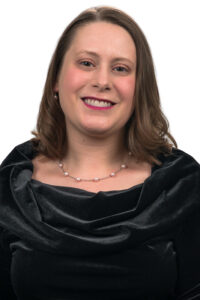
Name: Emily Elizabeth Klosterman, DO
Position: Breast surgical oncologist with Rochester Regional Health
Specialty: Specializes in breast surgical oncology. Practice focuses on management of benign and malignant breast and axillary disease, management of high-risk breast lesions, high-risk breast cancer patients, surveillance, and survivorship
Hometown: Buffalo
Education: Lake Erie College of Osteopathic Medicine, 2018
Affiliations: Rochester Regional Health hospitals
Organizations: American Osteopathic Association, American Medical Association, Association for Surgical Education, American Board of Surgery, American Society of Breast Surgery
Hobbies: Drawing, painting, sculpting, ceramics