

… to keep your body and mind in tune
By John Addyman
Staying hydrated?
Making sure you get enough protein?
Taking that daily walk?
Getting enough sleep?
Singing?
Wait…Singing?
Sure.
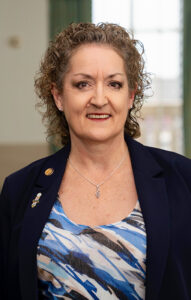
“It’s one of the most important things you can do — singing improves your mental well-being and social connections with people,” said quality specialist nurse Janine Schindler, 57, from Charlotte.
She’s a member of the Rochester Rhapsody women’s a cappella choir. She has been for 34 years.
“Singing is a powerful tool for overall wellness,” she said. “We all have stressful jobs and maybe you don’t want to go out in the evening to sing, but you feel so much better afterwards. Singing uses your muscles and lungs and increases endorphins and serotonin — feel-good hormones. Singing is a big stress reliever.”
The socialization aspects of being in a choir also become more important as we get a little older, Schindler added.
“I had a little bit of a fear of fitting in at the beginning,” she said. “But I very quickly made friends I still have today even though some are not in chorus anymore — one woman babysat my daughter.”
Rochester is blessed with choruses: more than 30 are listed on the Greater Rochester Choral Consortium at www.choral-rochester.org.
“If you’re interested in singing, just jump in,” advised Dan McInerney, 55, from Rochester. “There are so many choruses in town, although it may take time to fit in; you might want to start in a local community chorus.”
He sings with the Rochester Oratorio Society and VOICES.
And you’ll be welcomed no matter what you think about your vocal limits.
“The nice thing about singing — it comes back in time, like riding a bike,” said Sue Melvin, 65, the director of the 40-voice Rochester Rhapsody. “It can come back if you sing regularly and have a musical team to help you. If you can still carry a tune, the rest can be taught and learned. It might take a little while but that can happen.
“Every week we sing together is like a voice lesson: we provide that education through our musical leaders — it’s the same in most choirs, said Melvin. “We pride ourselves in helping women become the best singers and performers they can be, through our music team who helps singers.”
Joe Pietruch, 40, of Scottsville is a software engineer who has been singing since childhood and has been in choirs, chamber singers and even acapella groups at RIT. Now he’s part of the Chorus of the Genesee and has taken on barbershop harmonizing, which he admits is “challenging and interesting.”
“It as a fantastic hobby,” he said. “I encourage people — singing is a load of fun. It feels rewarding to do something bigger than yourself.”
He especially loves “standing in front of an audience and judges at a barbershop contest — it’s an experience listening to the other groups and what they’re bringing.”
A guy with an obvious technical interest in things, Pietruch would agree with the Barbershop Harmony Society that “singing synchronizes auditory perception, memory recall, linguistic processing, breath control, motor coordination and social attention. For older adults in particular, regular singing, especially in a group setting, engages multiple brain systems at once, helping to preserve and enhance cognitive functioning well into later life…[it’s] a whole-brain workout in plain sight.”
Living that good life of yours means staying active, being intellectually challenged and bumping into people along the way.
Singing can easily do that for you.
“This is a huge, joyful part of my life,” Melvin said. When she leads her group in song, every woman smiles, emotes and gets wholly into the tune and lyrics. “There’s also a huge health benefit. We’re fully aerating our lungs all the time. I rarely get any bronchial things.”
Any motorcycle rider will tell you that once the engine starts and you’re in gear, whatever stress you had seconds ago disappears.
It also happens when you lift your voice.
“Something comes over you. There’s no room for your worries. There’s a belonging…it’s really like a family and most choirs are like that,” Melvin said. “It’s not unique to women, but singing is something we do for ourselves. It’s not for our husbands, not for the kids or the boss at work, not for the laundry that needs to be done. It’s uniquely for us who like to do the same thing, experiencing the joy and at the same time making some pretty great music together.”
“A chorus is a community, almost like a family,” McInerney said. “You make connections to folks, people who are looking forward to seeing you every week. That’s the social piece of getting back out there and doing things after the pandemic. There’s something about singing, a chorus is a family and people look out for one another. If you’re not at rehearsal they wonder why.”
Think you might be interested in singing? Check to see what various local choruses are doing at www.choral-rochester.org.