
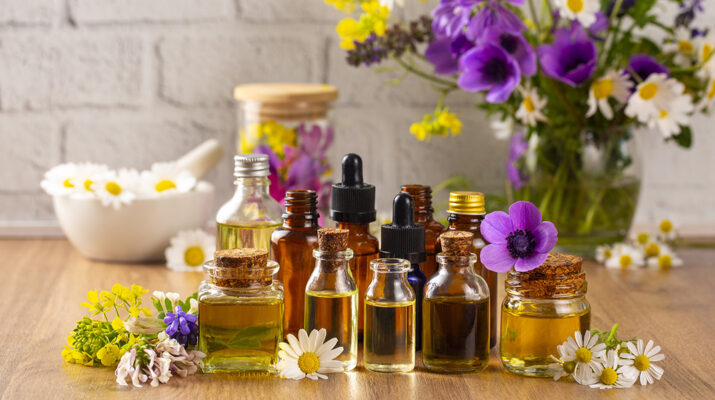
These potent oils can support good health in many ways
By Deborah Jeanne Sergeant

It may seem hard to believe that a tiny bottle of oil could effect how you feel.
But they have grown in popularity.
The number of people using them is hard to estimate, but according to Statista, the worldwide market for essential oil is estimated to reach $6 billion dollars by 2026.
“The oils work,” said Carol Morissette, owner of Healthy Alternatives Wellness Center in Rochester. “They’re good for relieving stress and inflammation and other things. I think people are looking for something to help them feel better.”
Most topically applied essential oils require a “carrier oil” to avoid skin irritation. Users place a few drops of essential oils into a carrier oil such as coconut oil, jojoba oil, sweet almond oil, olive oil or grapeseed oil. A few varieties of essential oils may be used in water (check the label before using) and some may be ingested. Always follow the directions carefully.
 “Buy from a reputable producer to ensure you’re buying a quality oil that’s 100% natural and organic,” Morissette said. “It should not contain any additive and it should be steam distilled. A lot of times, people go to the grocery store and pick up a bottle and they will say they don’t like essential oils because they have a bad reaction. But they’re having a reaction to the additives. You definitely want to make sure you’re getting something without chemicals.
“It’s OK to try essential oils while taking medication, but you’d want to ask your doctor and don’t just stop taking medication. While pregnant, ask your doctor first. Some of the ones you should avoid during pregnant are sage, Idaho tansy, hyssop, fennel, wintergreen and lavender.”
Specific oils for specific issues

Morissette recommends using essential oils to support good health for a variety of issues:
• Diabetes and blood sugar: Thieves blend, Ocotea, cinnamon bark, fennel, coriander, clove and dill
• Fibromyalgia: jasmine, marjoram, Roman chamomile, lavender, frankincense, helichrysum and rose.
• Kidneys: Roman chamomile, ylang ylang.
• Blood pressure: cypress, ylang ylang, lavender and marjoram
• Meditation: cedar wood, lemongrass and frankincense
• Stress/anxiety: grapefruit, rose and frankincense, clary sage, bergamot, sandalwood, petitgrain, geranium and citrus oils.
• Circulation: cypress
• Bones and joints: wintergreen
• Inflammation: basil, frankincense
“Frankincense helps with cancer treatment and chemo side effects,” Morissette said. “It is anti-inflammatory and anti-tumor. There have been a lot of tests on how it effects cancer and helps deflate the cancer cells, especially breast and skin cancer. Myrrh is also good too.”

Paula Howard, owner of Paula Howard Essentials in Rochester, said that typical use of essential oils is a few drops in the carrier oil.
“Especially if people decide to use oil outside of topical use, it’s always best to speak with your doctor,” Howard said. “If you’re pregnant refrain from oils altogether. They do penetrate.”
Howard also said that essential oils can help support good health in numerous areas, including:
• Nasal congestion: camphor, eucalyptus and peppermint.
• Body odor: lemongrass, rose (as a body mist)
• Skin toner: rose oil
• Insomnia: lavender
“It is limitless,” Howard said. “It all depends on the issue and the willingness to use it.”
She said that the key is obtaining quality essential oils, not “plant extracts,” as the latter are not as potent.
“You may find it’s something you can use when you have an issue or at every facet of your life,” Howard said. “Then you’ll realize why it’s been around so long. It’s part of how we have lived for centuries. More people as they find out about better living and better health learn that these things have always been available.”