

By Deborah Jeanne Sergeant
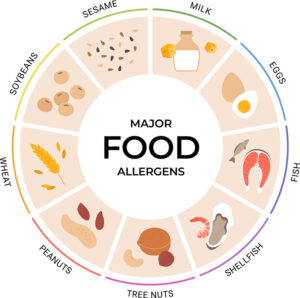 Generally, food allergies tend to cause immediate systemic responses such as hives, anaphylaxis and GI upset. Food sensitivities tend to cause more delayed GI responses including diarrhea, vomiting and stomach upset.
Diagnosis of a food allergy or sensitivity can feel overwhelming at first, especially when navigating prepackaged foods. Ingredient lists can be confusing.
However, physician Shahzad Mustafa, with Rochester Regional Health, said that the “Contains,” “May Contain,” and “Made in a Factory” portions of the label must by law list the top nine allergens. These include milk, eggs, peanuts, tree nuts, wheat, soy, fish, shellfish and sesame, which account for 90% of all food allergy responses.
“Things that say, ‘May Contain’ or ‘Made in a Factory That Also Processes’ is elective,” Mustafa said.
Some people are sensitive enough to allergens that cross-contamination such as equipment processing allergens and non-allergens would trigger a response.
“The risk strategy is best discussed with a food allergist,” Mustafa said. “See a board-certified allergist.”
He also recommended asking about FDA-approved medication “for anyone with a food allergy who’s over age 1. Seek an allergist to have these conversations. Oral exposure therapy can also be done.”
Tami Best, registered and certified dietitian, functional nutrition consultant and founder and owner of Promis of Vitality in Fairport, said that reading every label, every time is essential, even if it is a package that you’re familiar with. “A lot of transition occurs within the food industry. Products are bought out by other companies so the ingredients may change even if the package doesn’t change. There’s no other way for you to know.”
Some ingredient names are not as easily seen, such as casein or whey are milk ingredients. Learn the “alternative” names for allergens to learn how to avoid them.
“It’s super tricky for people the ‘hidden’ names,” Best said. “It may not be evident. Create a list for yourself of some of the common hidden names of foods you have an allergy to. There’s a lot of different ways ingredients can disguise if an allergen is present.”
A term like “natural flavoring” can refer to any number of food ingredients. “Malt” or “modified food starch” could bother someone with celiac disease as these may derived from grains containing gluten.
Not all packaged foods bear the same types of labels. Food purchased from a stall at a farmers’ market or table at a bulk foods store may have minimal information. People with food allergies or sensitivities should ask careful questions to ensure that they know what they are eating.
“There is a lot of concern there for people with allergies,” Best said. “If in doubt, avoid it. It can be unknown if it contains an allergen.
“The reality that others don’t recognize is the severity and quality of life issues that people with food allergies encounter. All of us use food for things beyond nourishment. It’s comfort and socialization. When people have to speak up and say they can’t eat it is not as easy as people might think.”
Help From Dogs
Did you know that gluten sensing dogs are helping people with celiac disease detect gluten? Trained as assistance animals, these dogs can alert their owners by a signal such as pressing their nose to the owners’ leg to signal the presence of gluten so they can avoid it.
How does it work? According to www.celiacservicedogs.com:
• “Dogs have 300 million smell receptors compared to just six million in humans.
• They can smell things at concentrations 100 million times lower than humans. Even when we don’t notice a scent, they can.
• They use Jacobson’s organ (also called the vomeronasal organ), which helps them detect large proteins like gluten. Even though gluten doesn’t easily go airborne, dogs can still pick up on it.
• You can see their body language change when they catch a scent. Whether they’re searching a room or sniffing a package, their behavior shifts noticeably when they find gluten.”