
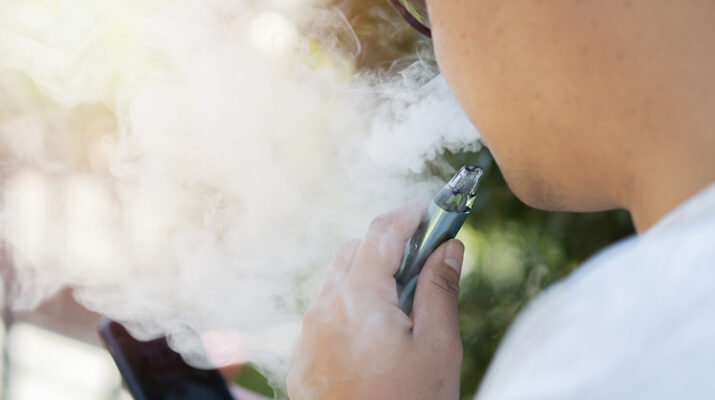
New rule likely to increase vaping among youth
By Jennifer Faringer
The Food and Drug Administration (FDA) authorized flavored electronic cigarettes (vapes) in May after countless appeals by the industry.
While this authorization is intended for adult use, both research and surveys have shown that flavored vapes are one of the most significant drivers of increased vaping among youth.
Flavored vapes are often responsible for a young person’s first exposure to smoking, disguising a high dose of nicotine which makes the products far more addictive. The newly authorized flavored vapes include mango, blueberry, and menthol and are sold under the names Gold, Sapphire, Classic Menthol, and Fresh Menthol.
The FDA insists authorization is not an endorsement of the flavored vapes and they say that their digital age-verification system will limit youth access. Vape users must verify their age with a legal ID on their cellphone. The vapes can then only be used when connected to the phone of the verified user. The FDA stressed they will be closely monitoring how these products are marketed and accessed and that they will suspend authorization for companies who fail to comply with regulations.
The National Council on Alcoholism and Drug Dependence-Rochester Area (NCADD-RA) launched a new community awareness campaign this spring that, along with our research-based education, will shine a spotlight on the health risks of vaping.
In the most recent National Survey of Drug Use and Health (NSDUH) released in 2025, nicotine vaping among those aged 12 and older ranks highest above alcohol use for the first time ever. Initiation of use before age 21 was at 34.5%, while initiation of use for those 21 or older was at 65.5%.
Marketing has played a large role in normalizing nicotine use once again and in making it trendy and attractive to young people. A common myth is that it’s just “harmless water vapor” when in reality 42 toxic chemicals have been identified. (A full list of these chemicals and a printable poster may be downloaded from the NCADD-RA’s website.)
Research has found vaping is not harmless or proven to be safe and it also poses secondhand risks. The particles in the vapor are 50 times smaller than the width of a human hair. They stay airborne for a long time and can easily penetrate the deepest part of the lungs. As a result, vapor can expose us to nicotine and other harmful toxins.
• Vapes are not proven to be an effective nicotine replacement therapy.
• Vape devices are also being used to smoke or vape marijuana concentrates (waxes and oils).
• Vapor exposes children not only to nicotine but also to other toxins.
• For every adult who may have quit smoking using vapes, there are 80 adolescents who had never smoked and who were introduced to smoking through vapes.
• Vaping is not quitting. Vapes may carry 50+ milligrams of nicotine, which is comparable to an entire pack of cigarettes, making vaping more potent and addictive.
To learn more about the dangers of vaping, parent tips and strategies, safe disposal, and more visit our website at: www.ncadd-ra.org/resources/awareness-campaigns/vaping-electronic-nicotine-devices/.
To request a presentation, please contact this writer at jfaringer@depaul.org.
 Jennifer Faringer, M.S.ED., CPP-G, is the director of Drug Dependence-Rochester Area (NCADD-RA).