
By Becky Carney
 Think about the last time you reached for something on a high shelf or turned quickly to answer someone calling your name. If that moment came with a flicker of unsteadiness, a hand that instinctively found the counter, that wasn’t bad luck. It was your body reporting real information.
We tend to talk about falls as accidents that come out of nowhere. In my experience treating patients, they rarely do. A fall is usually the visible end point of something that’s been building quietly for months, whether it’s a hip that’s grown weaker or a reaction time that no longer catches a stumble in time. The numbers back this up: according to the CDC, 1 in 4 adults over 65 falls each year, and more than a third of those falls cause an injury serious enough to need medical care.
Here’s what doesn’t get said enough: balance isn’t a fixed trait. It’s built from several systems working together, strength, sensory feedback from the inner ear and feet, and the brain’s speed at turning that feedback into a correction.
All three tend to erode gradually with age, which is why the decline sneaks up on people. Nobody wakes up unable to balance. It happens in small increments, easy to dismiss until a fall makes it impossible to ignore.
This is where physical therapy earns its place, not just after an injury, but before one happens.
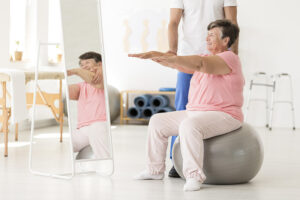
A physical therapist evaluates each of those systems individually and builds a plan around the weakest links, whether that’s targeted strength work, balance drills or practice with movements like rising from a low chair. It often includes an honest conversation about tools like grab bars or a cane, which patients sometimes resist as a sign of surrender. I encourage people to see them differently: as equipment that extends how long they get to stay in their own home, doing things their own way.
There’s a paradox worth naming here, too. After a fall or a scare, the instinct is to slow down and take fewer chances. It feels protective, but it usually backfires.
Less activity means less strength, which weakens the exact system that needs to be stronger, and the caution meant to prevent the next fall can end up setting up the conditions for it. The better path is finding the right dose of activity for where you are right now, which is exactly what a physical therapist is trained to help calibrate.
If a recent stumble or a nagging sense that your footing isn’t what it used to be has been on your mind, it’s worth raising with your primary care provider, who can connect you with a physical therapist to start rebuilding that balance before a fall forces the issue.
At St. Ann’s Community, that support is built into everyday life, with outpatient physical therapy available on site for independent living residents at Cherry Ridge and Chapel Oaks, as well as those in short term rehabilitation at the Transitional Care Center.
Falling more often as we age is common, but it isn’t destiny. Balance can be trained, and the sooner that work starts, the more independence stays firmly in your own hands.
 Becky Carney holds a Doctor of Physical Therapy degree. She is the therapy manager at St. Ann’s Community, overseeing Resident Therapy Services at Chapel Oaks and Cherry Ridge. She can be reached at rcarney@mystanns.com.