
By Deborah Jeanne Sergeant
In 2023, “after accounting for age differences, the veteran suicide rate in New York (24.9 per 100,000) was significantly lower than the national veteran suicide rate (35.2) but was significantly higher than the national general population suicide rate (18.2 per 100,000),” according to the US Department of Veterans Affairs,
The number of New York veteran men who died by suicide in 2023 totaled more than 150 but was fewer than 10 among women.
Ron Trovato, US Army veteran who volunteers with a veteran support group through Rochester Regional Health, completed two tours of duty in Vietnam, serving two years and seven months. He believes that the high rates of suicide among veterans is because of what vets experience, particularly in a war zone. “I was 18 and hardly shaving and went to Vietnam. There’s trauma, plus you don’t get a chance to grieve. There can also be other trauma.”
Trovato said that in that era and earlier, veterans were simply expected to return home to civilian life and pick up where they left off.
It’s not so simple, as any veteran would relate, to transition from the precise, regimented world of the military to the routine of finding a job, living with a family and spending time with friends who cannot begin to relate to the vet’s experiences.
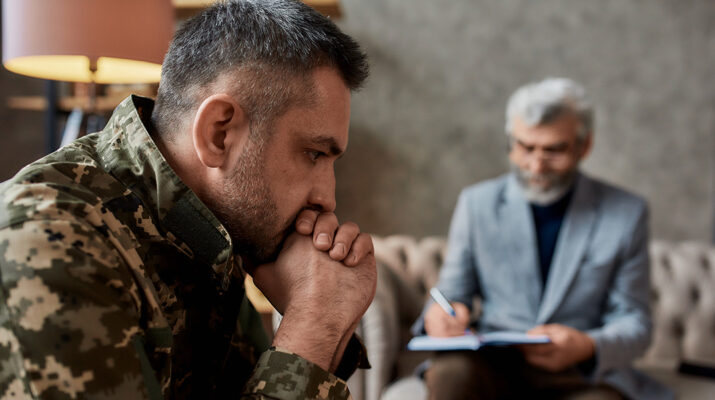
Seeing a professional to help work through the trauma can assist veterans who want to heal. However, the stigma about seeking this help presents a considerable barrier for most vets.
“I worked in law enforcement after discharge,” Trovato said. “I thought group counseling was a weakness. But it’s a huge positive. I got involved with Celebrate Recovery with a church. I went in kicking and screaming. They were not all vets, but the experience showed me that group counseling is helpful.”
Celebrate Recovery is a faith-based program hosted by churches nationwide that provides peer-led group sessions to help people recover from “hurts, hang-ups and habits,” according to the organization’s website, www.celebraterecovery.com.
Trovato added that the Veterans Administration now has “really good counseling” and that “People who are in the VA Healthcare system tend to do better with mental health.”
What veterans should not do is keep to themselves and never speak of their experiences.
“Whenever I isolated myself, I went to a bad place mentally,” Trovato said. “Being around people was a tremendous boost. Isolating leads to substance abuse. Substances are a slippery slope. You’re not thinking clearly and a lot of people get tangled with the law with things like DUI and domestic violence.
“One-on-one therapy is a big piece of it, if you have a good relationship with a therapist. Some relate more with a one-on-one therapist.”
It may seem like seeing a therapist who’s a veteran would be required. However, Trovato said that shouldn’t be a dealbreaker.
“A veteran meeting with a non veteran therapist won’t mean the veteran won’t bond with the counselor, but it does help if they do have military experience,” he added. “In the military, the psychiatrists don’t have combat experience.”
Veterans in crisis should dial 988, extension 1 or seek emergency medical care.