

Highland Hospital geriatrician believes that a whole-food, plant-based diet and regular exercise (including yoga) are key for older adults
By Chris Motola
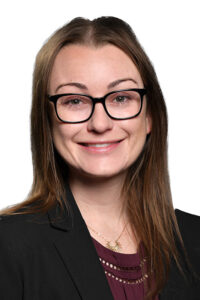 Q: Do you specialize in geriatrics or is it more an aspect of your practice?
A: I am internal medicine by training, but I work at Geriatrics and Medicine Associates. I treat largely a more geriatric population than I think a typical internist treats.
Q: How did you fall into that niche?
A: I worked at Highland as a hospitalist for four years prior to stepping into this role as a primary care doctor at this clinic. Our population at Highland Hospital tends to be a more geriatric population and I really enjoy working with this population. I actually grappled with doing a couple of different fellowships, but geriatrics and endocrinology were the two that I really thought I may pursue most seriously out of the other realms. There’s a lot that goes into the care for these for geriatric patients and really kind of making shared decision decisions on things, like how aggressive we are with certain medications, for example, such as for hypertension or for hyperlipidemia. And, really, we’re weighing the risks and the benefits for the individual person.
Q: A common criticism of the medical industry is that there’s a push to get people on medications, so it’s good to know that physicians are weighing pros and cons.
A: Yeah, I think that there is a big push for medication when you see something. You want to intervene on it and have the person on an appropriate treatment. But a lot of these medications may have side effects, such as, for example, the statin medications. A common side effect is myopathy or muscle aching and pain. And so, just weighing how high the cholesterol is, taking into consideration the numbers and data as well as the person in front of you and kind of making some shared decisions on medications that we use, I think is important for our patients and their families.
Q: I understand fall prevention is a focal point in your practice.
A: Yes, Yeah, I wanted to touch on fall prevention in the geriatric population. So, one of the big things with fall prevention in the geriatric population is a quote by Isaac Newton I like to start with, “A body in motion stays in motion.” So that means keeping folks active as they age and continuing regular exercise and activity as well as strength. Strengthening exercises like weight-bearing exercises is important for keeping them healthy and moving and able to function in their daily life, but it also is important for osteoporosis prevention.
Q: Correct me if I am wrong, but sarcopenia — or age-related muscle loss — in particular seems like it’s fairly preventable. How important is that for fall prevention?
A: I think that when they continue to be engaged in exercise and these weight bearing exercises, it has so many benefits including fall prevention. When folks tend to have a fall in the geriatric population, unfortunately, it tends to be not just one fall. It tends to kind of be a spiral of repeatedly having falls and needing to go to the hospital. Which is something I saw unfortunately often when I was working as a hospitalist.
Q: Why is that the case? Is it just that there’s a weakness and then you’re going to repeatedly trigger it or is it that the injuries compound?
A: It’s a good question. I think it’s multifactorial. Sometimes people trip and fall, we all do, not just the geriatric population; it happens to folks. So would be outside of what I’m speaking about with this. This is when folks are ill enough or their overall health is not well enough that they’re having unprovoked falls, meaning just standing up from the chair and falling over or something that’s not a mechanical fall. Their general health tends to be lower and they’re ill with their chronic comorbidities and other conditions to a degree that they’re having an unprovoked fall. So, they’re just more likely to then be in the hospital and then it’s complicated, perhaps, by even further deconditioning from being in the hospital for a period of time. And it just tends to be a downward spiral when we start to see falls.
Q: Is it difficult to find out what is deconditioning versus actual age-related decline?
A: That’s a good question. I keep harping toward a body in motion, stays in motion because I think it is such a good quote. Because I have some patients that are in their 90s and are functionally like a 70-year-old. And I’ve seen patients that are in their 50s who are also functionally like a 70-year-old. And I think that diet and lifestyle really impact the body as it ages. Of course, genetics plays a role, but engaging in regular exercise and then focusing on, I think, a whole food plant-based diet or Mediterranean diet, is really important. A lot of medical literature is driven by the pharmaceutical industry and funded by pharmaceutical companies, so it’s harder to get good data on the impacts that something like a whole food plant-based diet, including lots of vegetables, fruits and minimizing processed foods. Or a Mediterranean diet, if you would like to include in healthy lean meats and fish in the diet. I think that it has a much larger impact than we even have data to suggest. I am working on my yoga teacher certification currently and hoping to include that in my practice eventually once I am certified. What I’m hoping it will look like is a cohort of patients that engage in regular yoga practice, meditation and a whole food or Mediterranean-based diet for 10 to 12 weeks, after which we measure their biomarkers and compare them to what they were at the start of the study.
Q: You, as you said, favor a plant-based or Mediterranean approach, but how is an aging adult supposed to make sense of all the, often conflicting, studies on nutrition, some of which are even politicized?
A: I think it can be very challenging in the age of information, let’s call it, that we are in, with a lot of online content and digital content always coming at us from every direction. Even written content. There is an overflow of information so to speak. I think that the average person should really focus on what feels best to them. So, if eating certain foods does not make you feel good then avoid those foods. Of course, that seems quite obvious.
Q: And by “feel good” in this case, you mean the overall effect on their health, not necessarily like enjoyment of eating it?
A: Correct, exactly. But I do think that erring on the side of a more natural diet is going to help. Fruits, vegetables, minimizing sodium intake and controlling the types of fats you use.
Lifelines
Name: Sophia Russ, M.D.
Position: Internal medicine physician at Geriatrics and Medicine Associates
Hometown: Chenango Forks
Education: SUNY Downstate Health Sciences University College of Medicine
Affiliations: Highland Hospital
Organizations: American College of Physicians, American Board of Internal Medicine
Family: Partner, local family including younger brother (also a physician)
Hobbies: Meditation, yoga, cooking