
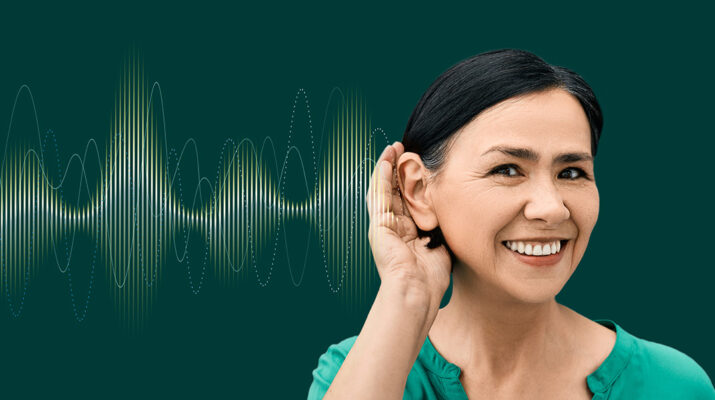
Why you should have your hearing checked even if you hear fine
By Deborah Jeanne Sergeant
You may never ask others to repeat themselves or turn up the TV volume, but you should have your hearing checked anyway.
Just as you start receiving other health screenings and exams at a “certain age,” you should have a baseline hearing exam.
Hearing loss is common and according to Elizabeth Runnion, Ph.D., assistant professor of Communication Sciences & Disorders at Nazareth University, one-third of people aged 65 to 74 years old have hearing loss.
“As we increase in age, the percentage becomes higher,” she said. “Half of adults 75-plus have hearing loss. That jumps to 80% in those 80 years and older. It’s not just something that occurs in old age. Hearing loss occurs across the lifespan. There can be childhood hearing loss because of genetics or infections.”
Because hearing loss tends to occur because of cumulative damage, Runnion said people should start at age 50, based on the findings of the American Academy of Audiology.
“One reason is if there’s a change in the future, you’ll have something to compare it to,” Runnion said. “You can identify and treat it early and you’d have education and your family members will have education about hearing loss and communication.”
On the other hand, if you do have a hearing loss, you will probably be the last person to know it.
Typically, the family members of the hearing loss patient realize the problem long before the patient does. Sometimes, patients sense that their hearing isn’t the same. However, they delay seeking a hearing exam.
“There are various factors, like personal beliefs, their own values, societal norms like they don’t want hearing loss identified because people will think they’re less capable which is far from the truth,” Runnion said. “There’s stigma around hearing loss and treatments like using hearing aids.”
She added that insurance coverage is sometimes a factor, as the level at which hearing aids are covered can vary depending upon the plan.
Some people dread the possibility of using hearing aids so much that they refuse to have their loss of hearing evaluated.
“Other than age-related hearing loss, there could be medical causes for hearing loss,” Runnion said. “The hearing evaluation can determine that a recommendation be made to see an ENT physician because it’s possible the hearing loss is in need of medical intervention.”
Hearing well isn’t good for us. Emerging studies have shown a correlation between untreated hearing loss and increasing risk for cognitive decline. For one, people who aren’t hearing well become more isolated, skip socializing and there’s a possibility that the center of the brain responsible for interpreting sound is not being stimulated and suffers atrophy.
“Evidence compiled by the American Speech-language and Hearing Association (ASHA) indicates that untreated hearing loss has links to depression, anxiety and even dementia,” said Mia Canale, doctor of audiology and clinical audiologist with Rochester Regional Health. “The good news is that treatment for hearing loss — such as amplification — can reduce risk for developing dementia, improve cognitive function and enhance quality of life. A baseline hearing exam is the first step toward these better health outcomes.”
The provider measures the softest sounds the patient can hear across different frequencies. Canale likened it to notes on a piano. The exam includes word repetition to assess how the brain processes speech.
“These results help diagnose hearing loss, guide treatment options and can set realistic expectations for hearing aids,” she said. “Our hearing abilities come in many forms and not everyone with a hearing loss will benefit from traditional amplification as their first line of treatment.”
Some people may experience ringing in their ears as a sign they have hearing loss. Others may struggle to understand words in a conversation or distinguish conversation when there’s background sounds.
“A baseline hearing test provides a foundation for identification, making it easier to track changes and ensure timely, comprehensive care,” Canale said. “You or a loved one will surely benefit from getting a baseline hearing exam. You’re not only helping yourself today — you’re protecting your health for the future. Contact any ENT office, a licensed audiologist, or visit asha.org/profind to find a provider near you.”