
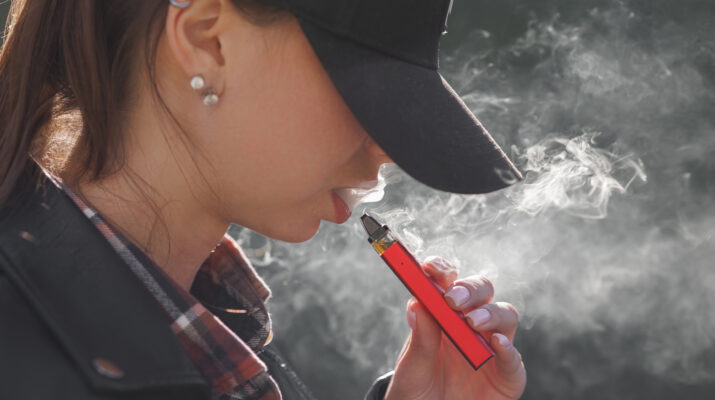
The use among teens under age 18 is low; however, close to 20% of young adults aged 18-24 currently use vapes
By Deborah Jeanne Sergeant
It may seem as if using e-cigarettes — commonly called “vapes” — represents a safer alternative to smoking conventional cigarettes. But that’s not so. Some vape liquid contains nicotine, for example.
“Nicotine is a highly addictive substance,” said Michael Seilback, assistant vice president of nationwide policy with the American Lung Association. “It’s been compared to heroin in its addictive quality. When it comes to vapes, they have very similar addictiveness to traditional addictive cigarettes which are highly addictive as well.”
Banning smoking cigarettes in public has helped drive down use. But vapes are more subtle. Seilback said that vapes are easier for people to hide since they lack the telltale cigarette smell. People can sneak hits on a vape in places that forbid smoking such as public restrooms.
“This is going to increase addiction,” Seilback said. “People can use it at their desks. Or in their bedrooms while their parents are sleeping. We’ve heard many cases of students who ‘rip their vape’ first thing when they wake up and last thing before when they go to bed and all day in between. Just the nature of what’s coming out is leading to further addiction.”
Vapes’ small, sleek design can fool parents who may think a USB device has tumbled out of their teen’s backpack. The use among teens under age 18 is low; however, close to 20% of young adults aged 18-24 currently use vapes and nearly 10% vape daily.
One reason is that the vapes in candy and fruit flavors appeal to young people compared with unflavored, mint and menthol flavored. The latter three are not outlawed in New York; however, “we know there are still a whole bunch of flavored products that are being sold in New York through black market and other illegal sales,” Seilback said. “We know that flavors hook kids. They’re more appealing. Big tobacco is absolutely doing everything they can to hook another generation of kids.”
Even the action of bringing an object to the mouth, inhaling and exhaling contributes to addiction. Seilback said that these motions are part of the addictive aspects of nicotine addiction.
“Teens and young adults don’t have a fully-formed brain,” Seilback said. “You make decisions you might not make as an adult. You might be attracted to the ultra-high nicotine products without really realizing what that means long-term. No one takes their first hit of a vape and thinks, ‘Am I going to still be addicted to this product 20, 30, 40 years down the line?’ Young women aren’t thinking about how hard it will be to quit when they’re one day going to be pregnant.”
In addition to the addictive nature of vapes, the liquid used is comprised of largely unknown, unregulated chemicals. The idea that they emit harmless water vapor is untrue. They often contain heavy metals. The vape device itself can also contain lead. Seilbeck said that vaping can cause irreversible lung damage and disease.
Initially introduced as a safe alternative and cessation aide, vapes have not been approved by the FDA as such.
“There’s a misunderstanding that has been exacerbated by the industry that these products are tools to help smokers quit,” Seilback said. “The industry had and still has the ability to go through a government process to say these are cessation tools and get approved for them if they were successful. They’ve never done such a thing but there are many people out there touting this idea about quitting.
“We would stress very strongly that there are approved cessation treatments to help e-cigarette users and traditional users quit. It means getting off the addiction completely and not switching.”
The New York Smoker’s Quitline provides free resources for cessation at https://www.nysmokefree.com.