
By Deborah Jeanne Sergeant

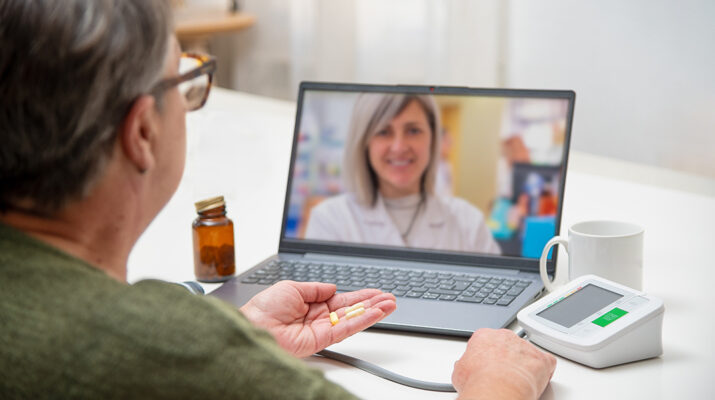
Telehealth is nothing new for locations such as remote areas of Alaska.
In a state where towns are scattered across often impassable landscapes, telehealth offers a lifeline.
But during the COVID-19 pandemic, telehealth became mainstream nationwide.
The Centers for Disease Control and Prevention stated that telemedicine claims as a percentage of all medical claims grew from 0.2% in 2019 to 15.4% in 2020. The CDC also noted another study which indicated a 50% increase in telemedicine between January and March 2020 compared with the same period in 2019.
“While rates of telemedicine use have decreased since the early pandemic, they remain higher than pre-pandemic rates,” the CDC states.
Telehealth has become routine medical issues and as a means to connect specialists to satellite locations staffed with mid-level providers. Telehealth has extended the reach for mental healthcare providers, which tends to rely less upon physical connection with patients.
Johanna Rae Woodside, owner of ONE Wellness Center in Rochester, believes that telehealth is a viable option still, but she prefers clients to see her in person if at all possible.
“The people who often can’t come in to be seen are often the elderly, and their ability to do telehealth is usually very limited,” Woodside said. “As much as I think it’s beneficial and functional, I still think that the actual eyes-on, hands-on is the best mode to go.”
She believes that some people prefer in-person visits because so many of their daily interactions have become automated and rely upon technology.
“People are starting to show more desire and demand for in-person visits,” she said. “They want to see a real person. That’s the same for many practitioners. It’s great to have someone on the other end of the phone, in-person visits lend more assurance to the patient.”
For some rural patients, driving two hours roundtrip for a 10-minute visit can present a significant barrier to seeing a specialist for a follow-up visit or for addressing chronic issues. Add to that childcare or eldercare responsibilities or employment obligations and it’s easy to see how telehealth can help more patients follow through with their providers.
Telehealth also offers providers a more streamlined day as patients who are using technology for their visit likely possess the comfort level necessary to complete an online intake form instead of occupying staff time inputting data from a paper form that the patients fill out in the waiting room.
Of course, many types of visits require hands-on care, such as a well-baby visit and vaccinations. But for those visits not requiring in-person care, telehealth delivers convenience to provider and patient. Mental healthcare represents one area where telehealth can prove particularly helpful. It’s typically non physical and both stigma and logistics present barriers to many people.
It’s estimated that 20% of American adults need but are not receiving mental healthcare. The aforementioned care responsibilities and rural location can prevent many people from seeking care. Telehealth can help people better access care from the privacy of their home. This segment of telehealth users outpaced others, surging to 41% of patients using telehealth to access care in 2021.
Using telehealth for mental health has remained popular. Fairhealth.org states that as of September 2025, the top five categories of why people use telehealth are mental health conditions (62.1%); acute respiratory diseases and infections (2.5%); endocrine and metabolic disorders (2.2%); overweight and obesity (2.0%); and sleep disorders (1.9%).
It’s hard to estimate what will happen next in telehealth. Will the pendulum swing back strongly in favor of in-person visits as screen-weary patients long for a face-to-face visit? Or will convenience win over more patients who are time-strapped and comfortable with technology?
One influence on telehealth’s future popularity may include aging out of the population that uses it least. Fairhealth states that the highest usage is between the groups of people who are 19 to 30 (23.8%) and those 31 to 40 (23.1%), followed by those 41 to 50 (16.8%). Patients aged 51 to 64 represent only 10.4% of those with telehealth claims, followed by people 65-plus, who represent only 6.5%. As the young and middle-aged adults age and minimal users die, the number of people using telehealth may increase unless the current children and teens eschew telehealth as they become adults.