
President and Chief Operating Officer, Clifton Springs Hospital and Clinic & Newark-Wayne Community Hospital
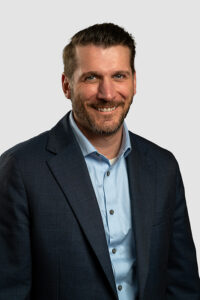 With the organization since: 2023.
In current position since: July 2025.
Education: Master’s in business administration specializing in healthcare administration, Cleveland State University; Bachelor of Science, biological sciences, SUNY Oswego.
Current Affiliations: HAWCNY board of directors, member at ACHE.
Career Highlights: Has advanced rapidly through the ranks of healthcare leadership, distinguished by his strong operational expertise, financial acumen and ability to guide large-scale transformation efforts. Has consistently taken on roles of increasing responsibility; from department-level oversight to system-wide operational leadership. Is known for delivering measurable results, developing high-performing teams and earning the trust of boards, physicians and community partners. His swift progression into senior executive positions is matched by his impact: improving quality and access, strengthening organizational performance and shaping regional healthcare strategy.
What skills make you an effective leader? “Practicing empathy and people-centered leadership have always been among my strongest and most meaningful skills. My background has also shaped a deep analytical mindset and a commitment to data-driven decision-making, both of which have been essential in leading effectively. I pair big-picture, strategic thinking with strong operational discipline, allowing me to guide teams with clarity, purpose, and measurable results.”
How do you describe your managerial philosophy or approach? “My managerial philosophy is rooted in leading with empathy and fostering a culture where my teams do the same. I believe people achieve their best work when they feel supported, respected and connected to a shared mission. I balance this people-first approach with strong analytical rigor, using data to guide decisions, ensure accountability and drive measurable improvement. Above all, my leadership is grounded in a commitment to the communities we serve; ensuring that every choice we make enhances access, quality, and trust for the individuals and families who depend on our hospitals.”
How do you personally demonstrate leadership and inspire your staff? “I demonstrate leadership by stepping confidently into complex or difficult decisions and making it clear to my teams that they are supported, not burdened, by those challenges. I aim to model accountability, steadiness, and transparency, and I encourage my leaders to carry those same qualities into their own teams. By creating an environment where people feel empowered and backed by their leadership, we cultivate a culture of confidence, collaboration, and shared purpose.”
How do you see the healthcare industry changing in the next few years, and how will you prepare for those changes? “One of the things I appreciate most about healthcare is how quickly the landscape evolves. In the coming years, I expect to see continued movement toward outpatient and home-based care, greater integration of digital tools and AI-supported clinical decision-making, and a stronger emphasis on coordinated regional networks that keep patients closer to home. To prepare our organization, I’m focused on advancing capabilities in these areas; strengthening our outpatient footprint, adopting technologies that meaningfully support clinicians, and building partnerships that enhance local access, continuity of care, and patient experience.”
What are your top three priorities this year? “My top priorities are to strengthen access and capacity across the care continuum of Rochester Regional Health in Ontario, Yates, Seneca and Wayne counties. Ensuring patients can receive timely, high-quality services close to home. I am also focused on developing our workforce and advancing a culture of collaboration and operational excellence, positioning both facilities for long-term, sustainable care delivery. Finally, I aim to deepen community partnerships to improve local health outcomes and reinforce trust with the individuals and families we serve.”
How can the healthcare industry in the region be improved? “Regionally, we have real opportunities to strengthen healthcare by expanding and improving access to both primary and specialty care. However, one of the most significant challenges — and opportunities — lies in transportation. This is a complex issue that requires systemic solutions involving health systems, private and government payers and coordinated efforts across local government and community organizations. While funding is always a barrier, improving transportation, especially in rural areas, has a direct and measurable impact: it enhances patient experience, improves throughput across the care continuum and ultimately leads to better health outcomes.”
What is one thing about you that people generally don’t know? “I recently started playing sledge hockey with the Mountain Warriors, a team based at Fort Drum that brings together veterans, service members and community athletes to support adaptive sports. I was introduced to the sport by my brother Ben, a community athlete who became paralyzed after an injury two years ago, and the sport has quickly become something I deeply enjoy. The game is intensely competitive, but what makes it truly meaningful is the way it creates a level playing field where able-bodied and disabled athletes compete side by side. It’s given me a new appreciation for adaptive athletics—and an incredible way to share a sport and meaningful time with my brother.”