
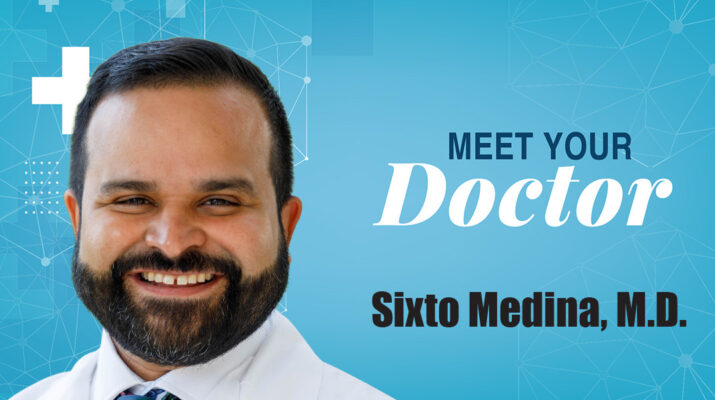
Specialist in obesity medicine affiliated with Finger Lakes Health: Some medical providers still fail to see obesity as a disease. ‘Unfortunately, people still see obesity as a personal choice, as lack of character and we like to blame the patient’
By Chris Motola
 Q: Obesity medicine makes up a significant portion of your practice. What’s changed since GLP-1s entered the picture as an obesity treatment?
A: So how has obesity medicine changed with the whole GLP-1? I mean, first of all, obesity started to be considered a disease process a little over 10 years ago, right? Unfortunately, people — including some medical providers — still see obesity as a personal choice, as lack of character and we like to blame the patient. And we lack the understanding of the disease to understand that it’s exactly that. It’s a disease process. It’s not a personal choice. It’s not something where people decided, hey, you know, I want to gain weight today. I felt like going up three dress sizes because I saw a cool suit and it was just not my size. If it were a personal choice, I would diet and exercise, like we like to suggest. Unfortunately, it’s a disease process that worsens hypertension and insulin resistance. So when we talk about the GLP-1s, I feel that it has been exciting because it has been able to shine a light over obesity as a disease.
Q: Where is the sweet spot between framing obesity as something the patient can take actions to address and something that is happening to them through forces not entirely within their control?
A: I feel that when we talk about obesity, there’s a lot of denial. We have normalized certain BMIs, a certain adipose tissue percentage in our body. We’ve normalized some body physiques to an extent that now we see normal weights and we’re telling people, you’re too thin. But I feel that most people that have obesity are frustrated — they’re either frustrated or they’ve given up on themselves. “I’ve tried a thousand times I don’t see any results so screw it!”
Q: How do you approach the subject with patients?
A: Because I work in primary care as well, I want to say maybe 40% of my clinic is medical weight loss. I take advantage of that people are coming in, looking for a new medical provider. I don’t ask them, “Hey, do you want to lose weight? It’s a sensitive topic no one wants to talk about. It’s embarrassing, people feel judged so you need to have an open conversation, get to know the person. My first questions are: how can I help you, what do you like to do and then I ask what concerns you about your health. And many times they say it’s their weight. I explain that it’s not their fault, it’s a disease they didn’t choose. You don’t choose your cravings. And then we start talking about pathophysiology.
Q: Is there a process in terms of choosing which tool is right for the patient, whether we’re talking about pure lifestyle modifications, or GLP-1s, or… I don’t know if bariatric surgery’s still as popular.
A: When the bariatric surgery came out, it was like this miracle procedure. And a lot of people still do it. Back then, they wanted to use a one-size-fits-all tool. Over time you notice that there’s a very big percentage of people that go through these procedures and they go back to where they were or even gain more. Or maybe they don’t, but they’ve definitely regained a significant amount of weight. Show me the data at 10 years, 15 years or 20 years. It’s a disease. It comes back. If you don’t treat it, if you don’t modify things, it will come back. It’s like your hypertension. If you don’t take your blood pressure pills, it’s going to come back. Yes, there are some people that they can eat less sodium and, oh, wow, blood pressure normalized. But when we have severe obesity they need more than just lifestyle modification. So we need to look at the comorbidities before I start choosing a medication. I need us to look at the comorbidities and I need to see what they’re actually taking because, unfortunately, we physicians push for a lot of medications that are obesogenic. And many of us don’t know it, don’t know that certain medications cause weight gain. Or we write it off as just a few pounds. No, no, we’re talking about a few pounds every year. SSRIs, beta blockers, medications for pain. A lot of these medications that we prescribe on a day-to-day basis are obesogenic.
Q: That’s a lot to untangle before you even get to food and activity.
A: So can we maybe tweak these medications so we can choose something else that is not as weight neutral, right? So that’s part of it. Then I’m identifying, hey, maybe these foods are triggering my hunger. These beverages are triggering my hunger. And then, of course, we have patients with significant insulin resistance, in which case maybe I would give them some Metformin and the GLP would work great, but I need to work on all the other moving parts. We look at metabolism, testosterone deficiency, perimenopause, menopause. These are syndromes that no one talks about, no one treats, because it’s a taboo in our society. These hormones trigger and target every single thing in our body. So when we’re deficient in these hormones, one of the side effects, one of the consequences is obesity, is weight gain. So you can tweak that and treat that as well, and it’s a lot easier for these patients to lose weight.
Q: With all the mixed cultural signaling going on, how should people think about what’s a healthy weight?
A: I don’t have a target weight goal with any of my patients. Because people ask me, hey, what’s a normal weight for me? It’s the weight where you feel comfortable. It’s a weight where you can move better, feel better, rest better, not ache, not feel embarrassed about. It’s a weight where you can look at yourself in the mirror and be like, damn, I really like myself. So there’s no set weight for that. There’s no, unfortunately, one thing I tell my patients, you know, do you know what BMI stands for? And like, oh, yeah, yeah, it’s height and weight and whatever. Yes, it’s a proportion of height and weight. But to be honest with you, the B in BMI stands for bullcrap. It says nothing about muscle mass. It says nothing about body fat percentage in your body.
Q: We’re around the same age. You know Hulk Hogan, right?
A: Of course.
Q: What was his BMI when he was at his prime? It had to have been very high.
A: Yeah, yeah, it was considered obesity class, too. If we’re going to use BMI, what was his body fat percentage?
Q: Far below average?
A: It would be ridiculous to say that Hulk Hogan or John Cena to be more contemporary, who has a BMI around 36 has obesity. Do you know where BMI comes from? During the Second World War, they were looking at these kids that were trying to enlist to go overseas and fight for our country and our freedom and they were asking these doctors what is an ideal body weight? They weren’t thinking about obesity. They were thinking about what was an adequate body weight to English.
Q: “Fighting shape?”
A: Fighting shape. So how does that translate to 2025, almost 2026?
Q: Should we all aim to be in fighting shape?
A: I mean no, come on, that’s not real. We’re designed to love food. We’re designed to love life, to enjoy life and when you put that into perspective… I mean don’t get it wrong, I like to exercise myself. I’ve had a weight issue all my life but I was able to understand my disease; I’m able to treat it. I’m still considered overweight by BMI, but I feel great I’m very happy where I’m at right now.
Lifelines
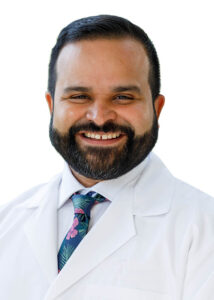
Name: Sixto Medina, M.D.
Position: Internal medicine physician at Finger Lakes Health
Hometown: San Juan, Puerto Rico
Education: Xavier University School of Medicine; Universitario Ramon Ruiz Arnau Bayamon
Affiliations: University of Rochester Medical System
Organizations: Obesity Medical Association
Family: Wife, four sons
Hobbies: Cooking, fine dining, travel, home brewing, meeting new people, hosting gatherings