
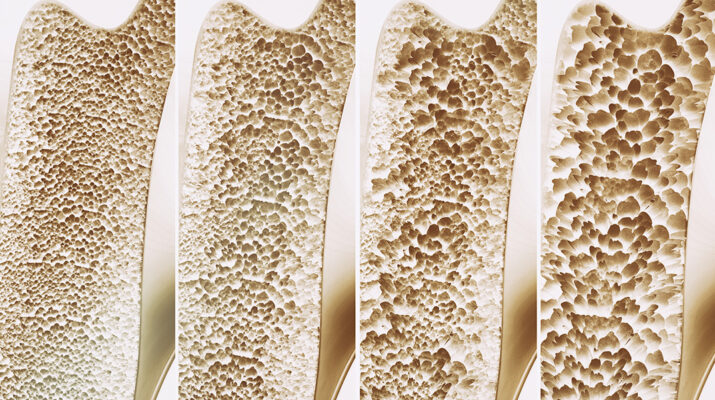
Try these tips to protect your bones
By Deborah Jeanne Sergeant
Eighty percent of Americans with osteoporosis are women, according to the Bone Health and Osteoporosis Foundation, a nonprofit organization dedicated to promoting awareness about bone health.
About half of women older than 50 will experience a broken bone because of osteoporosis.
Women are at higher risk for breaking a bone than men because of their smaller, thinner bones. Plus, as their estrogen levels decline because of menopause, that protective factor of the hormone elevates risk.
In addition, most people tend to need medication as they age and some prescriptions can leach calcium from bones.
Fortunately, women can reduce this effect with a few strategies.
Freda Hannafon, nurse practitioner at Rochester Regional Health and an osteoporosis specialist for more than 25 years, said that most healthcare providers tell patients if their prescribed medication will affect bone health, but she added that some providers forget to mention that side effect — and it’s not a rare side effect.
“There are so many medications that do have an effect on bones,” Hannafon said. “Try to learn as much as you can about osteoporosis. It’s not addressed as much as it should be. Many women don’t understand exactly what it’s all about. Make sure you’re going to good quality resources to learn about bone health like Cleveland Clinic and the Mayo Clinic and the Osteoporosis Foundation.”
Anticonvulsants, proton pump inhibitors, steroids and more can negatively impact bone health. Hannafon said that some medication can be avoided or switched to something that does not affect bone health.
“Go onto an osteoporosis medication as indicated,” she added. “These medicines have been well-studied.”
In addition, patients can do what they should to promote bone health, which can help mitigate the problem.
“The main thing is to engage in weight-bearing exercise,” Hannafon said. “If someone has poor balance, work on balance activities and physical therapy.”
Many physical therapy offices provide balance training. Physical therapy in New York is accessible without a physician referral and most insurers cover a few sessions without it. Hannafon also advised working with a fitness trainer to perform proper physical exercise.
Supplements also help, but Hannafon said that calcium citrate is more easily absorbed than calcium carbonate.
Laura Gardinier, dietitian and clinical nutrition manager for Rochester Regional Health, said that family history can play a role in osteoporosis.
“Know your personal information,” she said. “How can we optimize your bone health that if you have risk factors?”
One way is ensuring the intake of 1,000 to 1,200 mg. of calcium daily.
“Dairy is a great source of calcium, like milk, yogurt and cheeses,” Gardinier said. “Fortified plant milks have calcium. Look at leafy greens and canned fish with bones.”
Vitamin D helps the bones absorb calcium among other important functions. Called the “sunshine vitamin,” it is a pre-hormone the body generates upon exposure to sunlight. It is impossible to obtain sufficient vitamin D during the fall and winter in the North.
“The recommended daily allowance is 600-800 international units per day,” Gardinier said. “But during winter and fall, we’ll need to supplement.”
Very few foods naturally contain vitamin D and then it’s only in trace amounts. Commercially processed milk is typically fortified with vitamin D. In addition, trace minerals like magnesium, vitamin K and omega-3 fatty acids promote bone health. Mixed nuts are rich in these, among many other foods.
Besides food and supplementation, Gardinier promotes engaging in resistance exercise to stimulate bone formation, including body weight exercises such as push-ups, squats and calf raises; lifting weights, including free weights and weight machines; and using resistance bands.
“Doing this just a couple times a week makes a difference,” Gardinier said. “Try other activities like hiking, jogging, dancing.”
Genevra Petito, owner of Super Girl Fitness in the Rochester area, said that strength training is vital to building bone because “people need to load up their muscles and do something that feels heavy faithfully—something that is fun enough that they’re able to do it consistently.”
She emphasizes using good form and gradually increasing the load so the body responds the way they want it to.
“It’s important that people target the right spots in the body that are prone to bone loss like hips, the neck of the femur, wrists, and spine,” Petito added. “In addition, someone who is going to be losing bone—and all of us lose bone as we get older, along with muscle strength and postural strength—the postural alignment is important so you can lift properly.”
Working with a professional can help ensure correct form and posture.