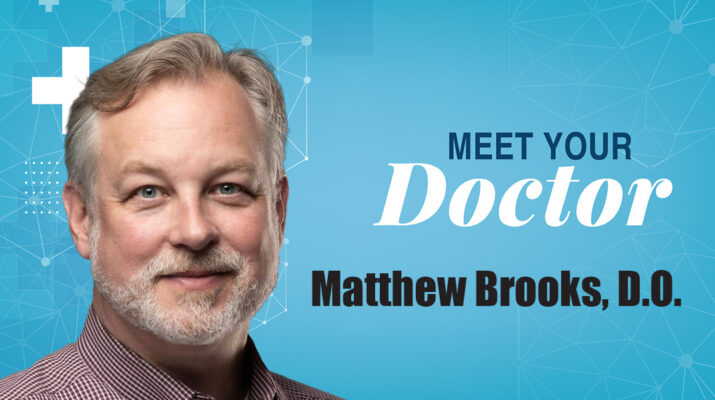
From stage to scrubs: A physician’s journey from acting to practicing medicine
By Chris Motola
 Q: You have a different origin story than most physicians. You started off as an actor. Was that something you were doing while you were pursuing your medical degree or was this a full career pivot?
A: I did a pivot. So acting is what I wanted to do from the time I was a young, young lad and I did that for the first 10 years of my adult life. And then I hit a point where I was tired of living on people’s couches. So I wanted to grow up and get married and so I did that and moved into children’s ministry for a couple of years. I didn’t make any more money at that than I did as an actor. My wife wanted us to relocate closer to where she had some family in Arizona, so that’s what we did. And while I was there, I was working as an enrollment counselor for the University of Phoenix, telling people it’s never too late to go do what you’re supposed to do with your life. I guess I was such a good salesman, I sold myself on the idea. I surprised her and said, I’m thinking about going to med school. We had two small children at the time, so she surprised me back by saying, go for it. That’s what I did.
Q: What made you settle on medicine?
A: I knew I needed to do something that made me feel good about the time I’m spending away from my family, that it wasn’t just go and earn a dollar, but it needed to be making a difference and helping people. It also needed to be financially beneficial, that the time away was worth it. I was looking at different ideas. Either teaching or medicine seemed like the right path for me, but teaching would have been too much of a pay cut. I knew I had the brainpower for it, just didn’t know if I had the schooling necessary to stick with it. So I had to do two years of prerequisites to get all the science classes in because I didn’t have those as an actor. And so I did that while I was working full-time and it didn’t turn me off from the idea. And so I sat for the MCAT and did well enough to get into medical school.
Q: I’m someone who has one foot in the liberal arts and another in STEM, which often is met with surprise, but I’ve found them to be more synergistic than not. I’m curious what your experience has been there. How was the transition?
A: I find it’s helpful to have both. Having been an actor, I worked with a lot of different people in a lot of different settings and certainly saw the gamut of personalities. So going into medicine and already having a background of how to talk to people and deal with people and meet them at their level, that’s been very beneficial for me as a doctor. So I don’t feel like I have to talk down to anyone. I feel like I can just meet them, put things in terms that they understand, and find that most of my patients feel like they’re getting heard and that they understand what they’re being told as far as what their health needs are. I tend to have patients who will call me up after going to see a specialist, going; “I just want to come in and talk to you about it so I know what they’re saying to me.”
Q: Is that what appealed to you about family medicine over other specialties?
A: Yeah, I initially thought I wanted to do emergency pediatrics. But being older, time was a consideration as well. And so I looked at the process of going into emergency peds and it would have been an additional three years of fellowship after residency. And I just didn’t think I had the time to commit to that. And so I thought I would do emergency medicine and then got into my rotations and family medicine really seemed to be a really good fit for me. I enjoyed what I did. I found that I was able to communicate with patients really well and was able to use my relational abilities with patients as opposed to just looking at problems really fast and coming up with a solution and then scooting out of the room. I was willing to sit down with patients and actually go over the problems and see what we could do to address the health need instead of just talking about treating disease.
Q: Do you think a mid-career shift changes the perspective you bring to medicine as well?
A: Absolutely. When I was an actor, my father had a heart attack. And the heart attack is what allowed them to find the softball-sized tumor that was in his lung. And the way that the ER physician broke the news to my mother was to say, “well, we could fix the heart, but I don’t know if there’s any point because he has lung cancer.” And that was just so blunt and in the face. It didn’t even consider whether there was something that could be done about it at that point. And then the oncologist came in and looked at it and said, “actually, this is still perfectly round. We can take that out. I don’t think it’s gone anywhere.” And after all their studies, he was correct. So I think having more life experience and understanding of what patients tend to know or not know helps. They don’t understand the science and the doctors aren’t doing a very good job of putting things in terms that people will understand. So I think going into medicine late in life has helped me be able to take complex ideas and put it into simple terms that they could understand.
Q: What are some common misconceptions people have about how to take care of their health?
A: A lot of people think that they eat healthy and once we start sitting there going over their diet, they realize that they don’t, or they think they understand how to approach their health risks and they don’t realize that they’re doing some things that really are not good for them. A lot of people don’t want to be on any medications, but they don’t want to make the lifestyle changes necessary to reverse their problems. Well, you’re going to have to do one or the other. I’m not quick to throw medicines at things. If we can fix it without medicine, I’d much rather fix it with lifestyle whenever we can.
Q: What’s one of the biggest bangs for the buck in terms of lifestyle changes?
A: Making sure you exercise is huge. Most people don’t. They don’t like to. They say, oh, I’ve got an active job. Having an active job is not the same as exercising. Because when you have an active job, you move, move, stop. As opposed to exercise, which is constant motion for 30 minutes at a time or more. And when they start to look at their day and can’t find the time for it. But it has to be non negotiable because, as we get older, the people who have not been exercising are the ones who have more problems with their hip joints and their knee joints. They have increased risks of heart problems and diabetes because of just a sedentary lifestyle. I think the phrase is “sitting is the new smoking.” If you are smoking, quitting is still certainly number one thing you can do to be healthier. But sitting for long periods of time, that has a lot of health risks too, and people don’t quite realize that.
Q: Do middle-aged and older people have misconceptions about exercise? Either in going too hard too fast or in failing to push themselves to their actual limits, whatever those happen to be?
A: I see both. I see some patients who jump from couch to Crossfit and they wind up hurting themselves. Or I’ll see patients who don’t push themselves enough and they just think that if they just walk to the mailbox and back that that’s enough. Walk to the mailbox and beyond before you turn back. It has to do less with the intensity of it and more with the amount of time spent. The target that I would shoot for for patients is 150 minutes a week, whether it’s 30 minutes a day, five days a week or 50 minutes a day, three days a week. Making sure that you are getting in that amount of time every week to keep your heart healthy, burn off extra sugar in the bloodstream and keep the muscles strong so that you’re reducing your fall risk as you get older.
Lifelines
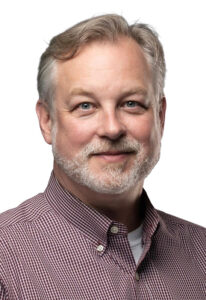
Name: Matthew Brooks, D.O.
Position: Family medicine physician at Thomspon Health Family Practice Honeoye
Hometown: Chickasha, Oklahoma
Education: Doctor of Osteopathic Medicine degree (D.O.) from Arizona College of Osteopathic Medicine-Midwestern University, Glendale, Arizona; family medicine residency, St. Anthony Family Medicine, Oklahoma City, Oklahoma
Affiliations: Thompson Health, Honeoye Family Practice
Organizations: AOA; American Board of Osteopathic Family Physicians
Family: Wife, four children
Hobbies: Exercise, D&D