
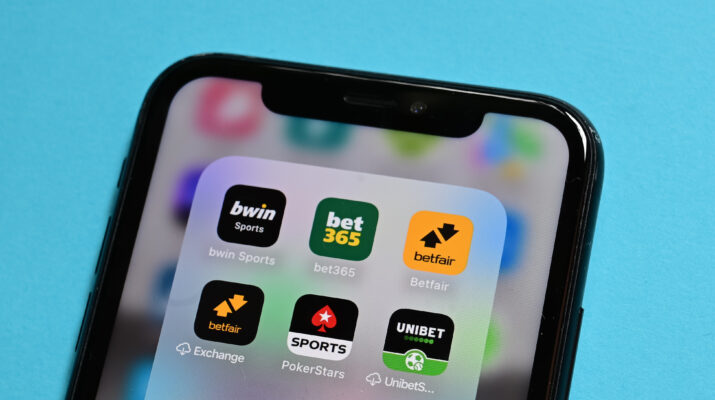
In 2025, New Yorkers lost approximately $2.5 billion on mobile sport betting alone
By Jennifer Faringer
March is Problem Gambling Awareness Month, an opportunity to ensure our communities understand the risks and impact of problem gambling on individuals and their families. This message is even more important now with the sharp rise in mobile sports betting. Since its legalization in 2022, access and availability have grown exponentially, exceeding $2 billion each month.
In 2025, New Yorkers wagered $26.3 billion which represents a 15.8% increase from each prior year. While the focus has been on the amount wagered and the corresponding tax revenue generated, often overlooked is the tremendous cost to individuals, their families, and the community. In 2025, New Yorkers lost approximately $2.5 billion on mobile sport betting alone. This represents devasting financial losses, often for families who can least afford it.
Approximately 85% of adults in the United States have gambled at least once in their lives; 60% in the past year. Approximately 1% or two million adults meet the criteria for a problem gambling disorder, while another 2% to 3% or four to six million would be considered problem gamblers. About a third may not gamble at all and many gamble infrequently.
Approximately 10% of gamblers account for 65% to 80% of all wagers. Aware of these dynamics, the gambling industry focuses on the high-risk 10% of the population, those who are the high intensity and high frequency betters. It is this segment of the population that generates most of the gambling revenue and who also experience the greatest amount of personal financial loss as well as suffer the consequences of those losses.
With the legalization of mobile sports betting, access and availability greatly expanded, allowing an individual to gamble anywhere and at any time of the day by simply using their mobile device. This increased and easy access led to high intensity high frequency betting, but it comes at a steep price, often impacting individuals who are at the greatest risk for developing a problem gambling disorder.
Know the warning signs
of developing problem
gambling:
• Do you experience mood swings based on winnings and losses?
• Do you neglect other responsibilities to concentrate on gambling activities?
• Do you experience impatience with loved ones because they are interrupting your gambling activities?
• Are you willing to eat less or go without food so that you can gamble?
• Do you gamble with money that is needed for necessary expenses such as household supplies, groceries, medication, electricity and rent or mortgage?
• Have you ever thought about cashing in your insurance policy for gambling money?
• Are you spending your retirement funds to gamble?
• Do you fantasize about big winnings and believe you will win back all your losses?
If you answered “yes” to any of these warning signs, please know that help is available! For more information on problem gambling, visit NCADD-RA’s website at www.ncadd-ra.org/services/finger-lakes-addiction-resource-center/ to find resources including the Problem Gambling Services Directory and a flyer with the active Gambler’s Anonymous (GA) meetings in Monroe County.
 Jennifer Faringer, CPP-G (Credentialed Prevention Professional—Gambling), is the director of the National Council on Alcoholism and Drug Dependence — Rochester Area (NCADD-RA).