
President and Chief Operating Officer, Rochester General Hospital
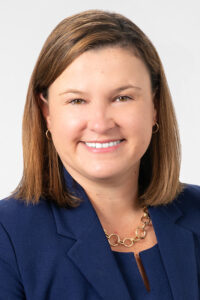 With the organization since: September 2022.
In current position since: May 2023.
Education: Master of Public Health, Yale School of Public Health; Bachelor of Science, University of North Carolina at Chapel Hill.
Current Affiliations: Board member of the Rochester Ronald McDonald House.
Career Highlights: A nationally recognized leader, she has been honored for her focus on innovation, operational excellence and improved patient outcomes. Under her leadership, Rochester General Hospital has strengthened efficiency, expanded capacity and advanced quality and safety efforts across the hospital. Previously held senior leadership roles at New York-Presbyterian/Weill Cornell Medicine and Johns Hopkins Medicine. Earned her master’s degree in public health from Yale University and a bachelor’s degree in health policy and administration from the University of North Carolina at Chapel Hill.
What skills make you an effective leader? “I believe my effectiveness as a leader comes from a combination of strategic vision, adaptability and a strong focus on people. Cultivating a collaborative environment where teams feel empowered, supported, and motivated to perform at their best. Staying close to both patients and front-line staff keeps me grounded, informed, and inspired to lead with purpose every day.”
How do you describe your managerial philosophy or approach? “My managerial philosophy centers on servant leadership — the leader exists to serve the people, not the other way around. I believe in creating a culture of collaboration, transparency, and accountability, where people feel valued and heard. By balancing a people-first approach with strategic, results-oriented thinking, I aim to foster an environment where our teams are equipped to meet the evolving needs of the patients and communities we serve.”
How do you personally demonstrate leadership and inspire your staff? “I demonstrate leadership by staying close to the work and remaining connected to both patients and front-line staff. Rounding on units and engaging directly with team members allows me to understand their challenges, celebrate their successes and see the tangible impact of our work on the community.”
How do you see the healthcare industry changing in the next few years, and how will you prepare for those changes? “I believe the healthcare industry is at a major inflection point, shaped by evolving workforce dynamics, rising costs and rapid advances in technology. The coming years will demand leadership that is strategic, flexible and fiercely committed to both innovation and human-centered care. I think also we will continue to see workforce pressure: staffing shortages, burnout and heightened demand will make it imperative for hospitals to rethink staffing and care delivery models. Finally, I see technology, especially digital health, telehealth, AI and automation, reshaping how care is delivered. I expect hybrid care models AI-driven workflow and decision support tools, and smarter infrastructure to become mainstream.”
What are your top three priorities for the next year? “First, continuing to advance patient care quality and safety. Second, ensuring operational and financial resilience through efficiency and innovation. Finally, continuing to strengthen, build and empower our workforce.”
How can the healthcare industry in the region be improved? “Improving healthcare in our region requires a multi-faceted approach focused on access, quality and collaboration. Above all, we need to ensure care is accessible and equitable for all community members, including expanding primary care, behavioral health, and specialty services. Additionally, continuing to invest in quality and safety initiatives; leveraging data, technology, and best practices will help deliver better outcomes for patients.”
What is one thing about you that people generally don’t know?“I’m a fraternal twin and my sister is a nurse. As a non-clinical hospital administrator, having her perspective has been invaluable throughout my career, especially when talking through the real-world challenges facing caregivers and patients.”