Executive Vice President, Chief Medical Officer, Rochester Regional Health
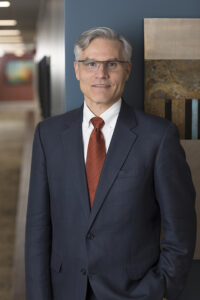 With the organization since: 2002.
In current position since: January 2013.
Education: Bachelor of Science in zoology, Brigham Young University; medical doctorate, University of Michigan Medical School; internal medicine residency, St. Joseph Mercy Hospital; nephrology fellowship, University of Michigan Hospitals.
Current Affiliations: Rochester Regional Health (leadership responsibilities); Rochester General Hospital (clinical practice).
Career Highlights: Has spent more than 20 years caring for patients and helping guide Rochester Regional Health. One of the most meaningful times in his career was the COVID-19 pandemic, when hospitals, public health leaders and community partners across the region worked together daily to care for patients and support each other. Has led a major effort to bring together dozens of RRH clinical departments into a smaller number of system wide, integrated departments and care teams called service lines. This helped standardize care, reduce duplication and make it easier for patients to receive consistent services across RRH’s many locations. Continues to practice nephrology, caring for people with chronic kidney disease and dialysis needs.
What skills make you an effective leader? “I persevere through challenging situations. Healthcare is full of complexities and steady persistence—combined with a clear sense of purpose—helps move important work forward even when the path is difficult.”
How do you describe your managerial philosophy or approach? “I believe leadership is fundamentally about service. The greater the responsibility someone holds, the greater their obligation to serve others. That principle guides how I approach decisions, relationships and the work we do on behalf of our patients.”
How do you personally demonstrate leadership and inspire your staff? “I try to treat everyone with respect and patience. My hope is that by modeling those values, our teams will carry them forward into their own interactions; with colleagues, with patients and with our community.”
How do you see the healthcare industry changing in the next few years, and how will you prepare for those changes? “Healthcare always changes quickly, but the pace is accelerating. The government is shifting reimbursement dramatically, with more payments tied to patient outcomes. That means health systems must become even more effective and efficient. We will also see more technology—especially AI—supporting clinical decision-making and documentation, as well as evolving roles for many healthcare professionals. Preparing for this future requires strong systems, integrated networks, and continued innovation in how we deliver care.”
What are your top three priorities for the next year? “First, continuing to bring new care innovations to our patients. Second, strengthening our network of community doctors so patients can get coordinated care close to home. And third, improving access so people can get the right care when they need it.”
How can the healthcare industry in the region be improved? “Improving access is essential. Technology can help bridge gaps by extending virtual care, supporting clinicians, and making it easier for patients to connect with the right expertise. We should continue to expand these tools while maintaining the personal connection that defines good care.”
What is one thing about you that people generally don’t know? “Most people don’t know that I became fluent in Swedish after marrying my wife, who grew up in Sweden. Learning her language helped me connect more deeply with her family and culture.”