
By Anne Palumbo
 Take a seat, protein.
Despite the way you’ve wooed us in recent years with your flashy promises of muscle growth, weight management and vitality, the food industry has spoken, and this year’s sexiest nutrient is fiber. Goodbye “protein-maxxing,” hello “fiber-maxxing.”
Akin to the bookworm who takes his glasses off or the scientist who finally lets her hair down, fiber has been found to be far more complex and interesting than previously thought. Indeed, fodder for first dates and cocktail parties alike!
Why the newfound fawning?
New research has revealed fiber’s wide-ranging benefits beyond mundane bodily functions like bowel movements and regularity.
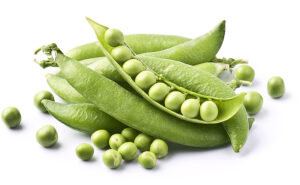
Peas, today’s featured food, are an excellent source of fiber, providing both soluble and insoluble fiber, a sought-after combo that provides a wealth of benefits.
Let’s begin with this legume’s most scintillating benefit: how its soluble fiber can help lower cholesterol. You might want to dim the lights. OK, now close your eyes and imagine the soluble fiber in the peas you just ate turning into a gel-like substance that traps cholesterol, ferries it out of the body and ultimately reduces the risk of heart disease. Why, your heart may fall in love with you all over again!
But, wait.
There’s more to this salubrious fiber. Its gooey consistency also slows down the digestive process, which helps prevent spikes in blood sugar, a boon for anyone with blood-sugar concerns. Soluble fiber also nourishes good gut bacteria that benefit metabolism and immunity.
Peas’ insoluble fiber is equally arresting. Beyond its ability to keep us regular and reduce the risk of diverticulosis—no small feat!—it acts as a “scrub brush” for the colon, cleaning out bad bacteria while increasing the good, and potentially lowering cancer risk. And because it’s indigestible, it aids in weight management by helping us feel full without adding calories.
Captivate all with this riveting topic and, more likely than not, someone will whisper, “You had me at scrub brush.”
Of course, peas offer a wealth of benefits beyond fiber. Along with being one of the best plant-based sources of protein, they contain a decent amount of heart-healthy minerals, such as magnesium, potassium and calcium, and they’re packed with antioxidants that help quell inflammation that may lead to disease, cancer and other chronic health conditions.
Helpful Tips
If buying fresh peas, look for firm, plump pods that are bright green. Unwashed, unshelled peas will last several days in the refrigerator. If buying processed peas, many recommend frozen over canned—for taste, texture, and nutrition. Steaming peas in as little water as possible helps to preserve its vitamin C.
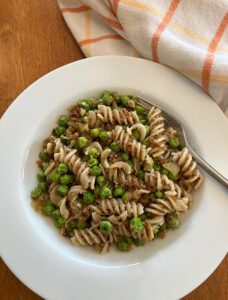
Pasta with Peas and Breadcrumbs
Serves 4-6
 Ingredients
▪ ¾ pound (about 12 oz) short pasta* (like penne or fusilli)
▪ 3 cups frozen peas
▪ 2 tablespoons butter
▪ 3 tablespoons olive oil, plus extra for drizzling
▪ 1 medium onion, chopped
▪ 4 cloves garlic, minced
▪ ½ cup whole-wheat breadcrumbs
▪ ½ cup grated Parmesan cheese, plus extra for garnish
▪ Salt and pepper to taste
▪ 2 teaspoons Italian seasoning
▪ ½ cup reserved pasta water
Directions
1. Bring a large pot of generously salted water to a boil. Add the pasta and cook according to package directions until al dente. In the last 3-4 minutes of cooking, add the frozen peas to the pot with the pasta. Before draining, reserve about ½ cup of the starchy pasta water, then drain the pasta and peas.
2. In the same pot, melt the butter and olive oil together over medium heat. Add the chopped onion and sauté for about 5 minutes until the onions are soft and fragrant. Add the garlic and cook 1 minute more.
3. Sprinkle the breadcrumbs into the pot and stir until coated with the oil and butter. Cook for 2-3 minutes, stirring occasionally, until they are golden brown and reach a wet-sand consistency.
4. Stir the Parmesan cheese, Italian seasoning, salt, and pepper into the breadcrumb mixture.
5. Add the cooked pasta and peas to the pot and toss everything together to coat evenly. If the mixture seems too dry, add some of the reserved pasta water to create desired consistency.
6. Serve immediately, and garnish with extra Parmesan cheese and an additional drizzle of olive oil, if desired.
• Note: I used high-fiber chickpea fusilli to bump up the fiber even more.
 Anne Palumbo is a lifestyle columnist, food guru, and seasoned cook, who has perfected the art of preparing nutritious, calorie-conscious dishes. She is hungry for your questions and comments about SmartBites, so be in touch with Anne at avpalumbo@aol.com.